

Visual Evoked Potentials - VEP Test
Visual evoked potential tests (VEP) are highly sensitive tests that must be performed under specific technical conditions. As your body experiences light, sound, touch, and other sensations, your brain receives this information as a series of electrical signals. In certain neurological diseases, there may be slowing or disturbances in the transmission of these signals.
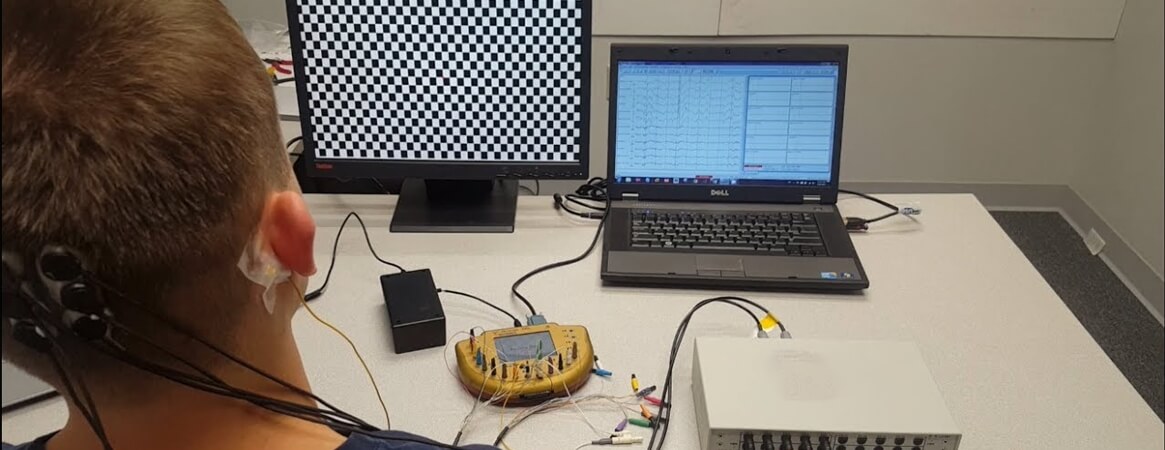
These tests measure the electrical activity in the parts of the brain stimulated by light, sound, and touch to help localize the site of damage.
There Are Three Main Types of Evoked Potential Tests (VEP):
Visual Evoked Potentials (VEP): While sitting in front of a screen, your doctor or technician asks you to watch a checkerboard pattern.
Brainstem Auditory Evoked Potentials (BAEP): Headphones are placed on each ear to deliver sounds while recordings are made.
Somatosensory Evoked Potentials (SEP): Brief electrical stimuli are applied to one of your arms or legs.
A fourth type of test, motor evoked potentials, is used for damage to nerves in the brain and spinal cord that control body movement.
During the tests, needle or surface electrodes will be placed on the scalp. This is a safe and painless procedure. Performing all three types of evoked potential tests typically takes approximately 2 hours. Results are interpreted by a physician with specialized training. A trained technician will guide you and assist with the recording.
Evoked potentials are supplementary tests to other laboratory methods, and your physician will evaluate the results of these tests in conjunction with your other laboratory test results and symptoms.